
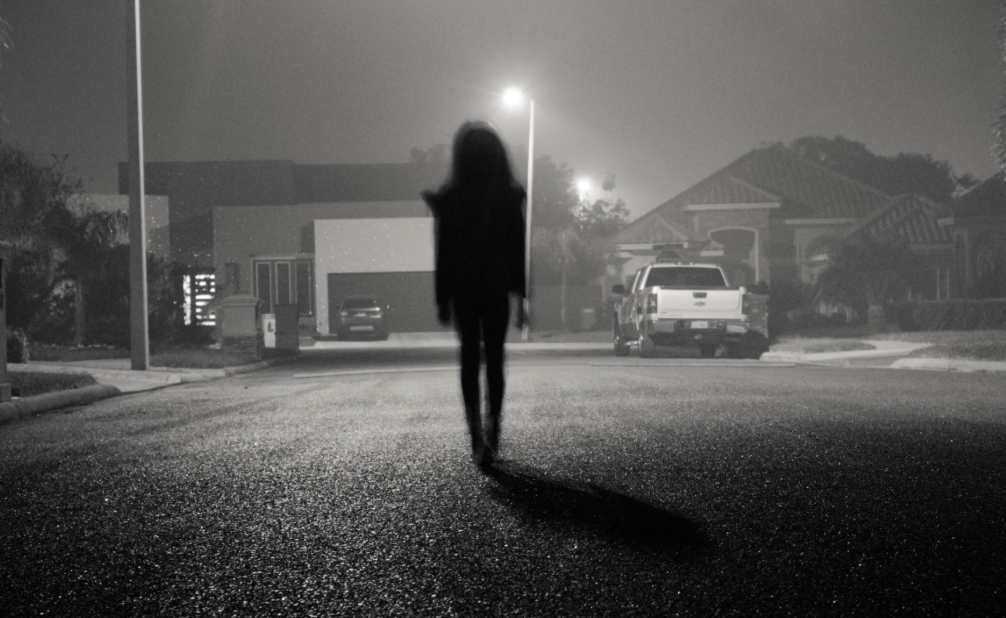
Feeling safe should not depend on the time of day. Yet for many people, particularly women, the simple act of walking home at night can become a source of anxiety. Poorly lit routes, dark corners and inconsistent lighting levels contribute directly to a heightened fear of crime and can, in some cases, create conditions where crime is more likely to occur.
Across the UK, police forces and local authorities are increasingly recognising that good lighting design is not just about visibility. It is about safety, well-being and public confidence. Recent news reports (linked below), including coverage of targeted lighting and CCTV installations, show how these interventions can make a meaningful difference to how people feel and move through their communities.
At CU Phosco, we have spent decades designing and delivering urban lighting that supports safer, more inclusive public spaces. Here is what these national examples tell us, and how better lighting design can help.
WHAT RECENT LOCAL AUTHORITY ACTIONS TELL US ABOUT SAFETY AND LIGHTING
The conversation about night-time safety is not hypothetical. Councils are now acting directly in response to residents reporting they do not feel safe after dark.
In Basildon, where street lighting was switched off between 01:00 and 05:00, residents consistently raised safety concerns. When the possibility of reinstating night-time lighting returned to the table, councillors acknowledged “it's the biggest issue after bins, as people just don't feel safe." Papers from the council noted that switching lights back on could reduce the perception of crime and help people feel safe and secure in their homes, towns and open spaces.
Elsewhere, in Westmorland and Furness, parish councils highlighted the emergence of dark holes as older lighting stock failed. Some older residents reported that they no longer felt able to go out after dark. The council is now considering unifying lighting assets under a central system and switching all replacements to energy-saving LED. This aligns with long-term safety and carbon-reduction goals.
These cases show a clear pattern: good lighting is fundamental infrastructure for public safety, and its absence is immediately felt by the community.
WHEN LIGHTING DIRECTLY SUPPORTS WOMEN'S SAFETY
The strongest recent example comes from Ross-on-Wye and Leominster, where police identified four high-risk areas with persistent concerns around antisocial behaviour, particularly towards women and girls.
Working with the police and town councils, new street lighting and CCTV were installed on key walking routes. These were routes used by women returning home at night.
According to Herefordshire Police, women’s safety is a key priority, and community feedback helped them target their resources where they would make the most difference.
Councillors involved in the programme now say these locations have become much safer places as a direct result of better illumination.
This reinforces what lighting designers have long known. Good-quality, appropriately placed lighting reduces hiding spots, increases visibility of faces and movement, and creates urban environments where people feel confident and supported.
DESIGNING OUT FEAR: HOW LIGHTING HELPS PEOPLE FEEL SAFER
From research and practical experience across hundreds of urban projects, several lighting principles consistently improve safety and comfort, especially for women.
1. Avoiding dark spots through consistent illumination
Uneven light distribution creates pools of brightness surrounded by shadow. These conditions are most often cited as unsafe. Optics matter, and luminaires such as our E950, E951 and P863 ranges are engineered to deliver smooth, uniform light across pavements, cycleways and parks.
2. Using high-quality colour rendering
Poor colour rendering can distort faces, clothing and movement. This increases anxiety and reduces situational awareness. Our LED ranges are available with high CRI options, giving clearer night-time visibility and helping CCTV work more effectively when installed alongside lighting.
3. Creating comfortable brightness levels
Overlighting can cause glare, making it harder to see. Underlighting reduces visibility. CU Phosco’s portfolio offers precise lumen packages and optics so we can tune lighting levels to each environment. This ensures every watt matters.
Working With Communities
Lighting for safety works best when the community is involved.
CU Phosco regularly supports local authorities, BIDs and neighbourhood groups through:
- route-by-route lighting assessments
- evening walkabouts with residents and the police
- design reviews for parks, cut-throughs, footpaths and waterfronts
- pilot installations to test brightness and optics before rollout
In Ross-on-Wye and Leominster, community insight shaped the final lighting placement. This ensured luminaires were positioned in the exact spots that women identified as unsafe.
This approach is the same one we take on regeneration schemes, town centre upgrades and active-travel corridors across the country.
SMARTER LIGHTING, SAFER PLACES
The message from recent UK case studies is clear. People feel safer where lighting is consistent, well designed and tailored to the needs of the community.
For women and girls, who are statistically more likely to avoid certain areas after dark, these improvements are essential.
From reinstating lighting in Basildon, to tackling dark holes in rural villages, to targeted safety schemes in Ross-on-Wye and Leominster, the evidence points in the same direction.
Lighting is not a luxury. It is one of the simplest and most effective ways to support public safety and help people feel confident and comfortable in their communities.
With modern, energy-efficient LED technology and smart controls, councils do not need to choose between safety and sustainability.
At CU Phosco, we are proud to help local authorities design lighting schemes that support safer, more welcoming places for everyone.