
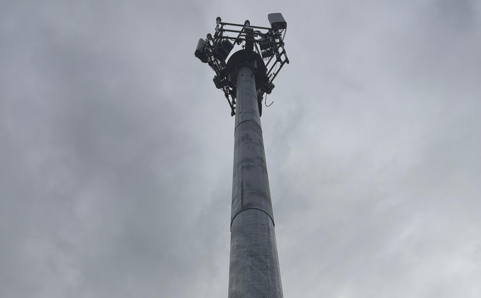
Recent government plans to eliminate mobile blackspots on major rail lines highlight a national challenge — and an opportunity. Upgrading existing street furniture could provide a faster, lower-cost route to improving connectivity along Britain’s mainline train routes.
The earliest rollout stages of new generations of cellular networks typically begin in our largest towns and cities. There’s an understandable economic and geographic logic to this: service providers need to rapidly monetise their networks, and densely populated areas promise the highest returns.
All well and good for the urbanites, but something of a disadvantage for those living or working in more remote locations. In fact, poor network coverage across large areas of the UK has been an issue for quite some time, and it’s more than just an inconvenience; there are safety implications for those who live, work or travel off the beaten track.
This disparity has been recognised and is being addressed through the Shared Rural Network programme, a £1 billion joint initiative between the UK Government and the mobile industry to extend 4G voice and data coverage to 95% of the UK’s landmass by the end of 2025.
PROJECT REACH: A NATIONAL EFFORT TO ELIMINATE BLACKSPOTS
Some of our busiest transport corridors still experience communication drop-outs. More than 1.7 billion mainline rail journeys are made in the UK each year, yet routes that cut through sparsely populated countryside often lack nearby cellular infrastructure to ensure consistent service quality.
According to a recent BBC News report, Network Rail has signed a deal with private telecoms firms to eliminate mobile blackspots on several major railway lines and tunnels by 2028 — part of a government-backed initiative known as Project Reach. The programme aims to boost 4G and 5G connectivity on trains and in stations, improving passenger experience and productivity while supporting the UK’s wider digital innovation goals.
Announced in 2021, Project Reach will see 1,000 km (621 miles) of ultra-fast fibre-optic cable installed along the East Coast, West Coast, Great Western, and Chiltern Main Lines — saving taxpayers around £300 million through private investment. Work is due to begin in 2026, with a progressive rollout expected through 2028.
The scale of the task is significant. Network Rail manages 16,000 km of infrastructure, including 11,000 tunnels and more than 30,000 bridges and viaducts — many of which limit installation opportunities. Upgrades must be timed around maintenance windows, adding further complexity.
Decades ago, rail travel was promoted with the slogan “Let the train take the strain.” Today, the challenge is ensuring our communications networks don’t.
SMARTER INFRASTRUCTURE, SHARED BENEFITS
While dedicated rail upgrades are essential, much of the connectivity gap could be closed by optimising the infrastructure already in place around rail corridors.
In many locations, upgrades to existing lighting columns and street furniture could deliver the same benefits faster — while also improving local amenities.
Around stations, depots, car parks and nearby link roads, CU Phosco’s Connected Urban smart poles offer a practical solution. These multi-use columns combine state-of-the-art street lighting with capacity to host cellular antennas, CCTV, IoT sensors, public-address systems, Wi-Fi nodes, and EV charging equipment.
By integrating such technology within shared assets, local authorities and network operators can accelerate connectivity rollout, avoid duplicated civil works, and enhance the public realm at the same time.
LIGHTING THE WAY TO A CONNECTED FUTURE
De-siloing different users’ requirements improves quality of life both in terms of service provision and by de-cluttering the urban and rural landscapes. And, in terms of further reducing the cost burden, Connected Urban opens up revenue opportunities through rental arrangements with mobile network operators in sought-after locations.
As the UK invests billions in digital infrastructure, re-using and upgrading existing assets will be key to delivering value quickly. Smart columns capable of hosting both lighting and communications equipment can help accelerate connectivity, reduce carbon, and support more resilient communities across the country.